
Professional Context
Balancing the daily grind of ensuring equipment accuracy against the pressure of meeting stringent deadlines, Calibration Technologists and Technicians must navigate a delicate dance between quality assurance and time-to-completion, all while keeping error rates in check, making every minute count in their quest for precision.
💡 Expert Advice & Considerations
Don't waste time trying to automate everything, focus on using Grok to augment your analysis of complex calibration data and identify trends that can inform your quality control processes.
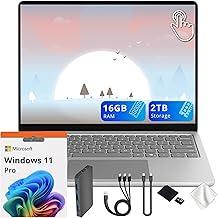
Recommended hardware for AI workflows
Microsoft Surface Laptop Studio 2
Versatile studio design with a discrete GPU for creators.
As an Amazon Associate, ProfessionPrompts earns from qualifying purchases.
Advanced Prompt Library
4 Expert PromptsEquipment Drift Analysis
Given a dataset of calibration readings for a specific piece of equipment over the past 6 months, including temperature, humidity, and usage hours, identify the most significant factors contributing to equipment drift and provide a predictive model to forecast future deviations, taking into account seasonal variations and operator-induced errors, with a focus on minimizing downtime and optimizing maintenance scheduling.
SOP Optimization
Analyze the current Standard Operating Procedure (SOP) for calibrating a particular type of sensor and identify areas where the process can be streamlined without compromising accuracy, considering factors such as technician expertise, equipment availability, and environmental conditions, and provide a revised SOP that incorporates these improvements, including updated workflows and checklists.
Error Rate Trend Analysis
Examine the historical record of calibration errors for a specific team of technicians over the past year, including data on equipment type, calibration frequency, and technician training levels, and detect any emerging trends or patterns that may indicate underlying issues with training, equipment maintenance, or quality control procedures, providing recommendations for targeted interventions to reduce error rates and improve overall quality assurance.
Quality Audit Risk Assessment
Evaluate the risk of non-compliance with regulatory standards for a upcoming quality audit, based on a review of recent calibration records, equipment inspection reports, and technician competency assessments, and generate a prioritized list of high-risk areas that require immediate attention, including recommendations for corrective actions and additional training or resources needed to mitigate these risks and ensure a successful audit outcome.
Alternative AI Workflows
Discover how different language models approach tasks for this specific profession.

ChatGPT Prompts for Calibration Technologists and Technicians
Explore ChatGPT-optimized templates

Claude Prompts for Calibration Technologists and Technicians
Explore Claude-optimized templates

Gemini Prompts for Calibration Technologists and Technicians
Explore Gemini-optimized templates

Perplexity Prompts for Calibration Technologists and Technicians
Explore Perplexity-optimized templates

Jasper Prompts for Calibration Technologists and Technicians
Explore Jasper-optimized templates
Frequently Asked Questions
What are the best Grok prompts for Calibration Technologists and Technicians?+
Balancing the daily grind of ensuring equipment accuracy against the pressure of meeting stringent deadlines, Calibration Technologists and Technicians must navigate a delicate dance between quality assurance and time-to-completion, all while keeping error rates in check, making every minute count in their quest for precision. This page provides 4 expert, copy-paste Grok prompts crafted specifically for Calibration Technologists and Technicians, each with a clear use case and customization notes.
What tasks do these Grok prompts help Calibration Technologists and Technicians with?+
They cover tasks such as Equipment Drift Analysis, SOP Optimization, Error Rate Trend Analysis, Quality Audit Risk Assessment.
What should Calibration Technologists and Technicians keep in mind when using Grok?+
Don't waste time trying to automate everything, focus on using Grok to augment your analysis of complex calibration data and identify trends that can inform your quality control processes.
How many Grok prompts are included, and are they free?+
There are 4 ready-to-use Grok prompts on this page. They are free to copy and use, and you can adapt each one to your specific situation.
Calibration Technologists and Technicians
DashboardWorkflows
5