
Professional Context
Balancing the urgency of analyzing satellite data to predict severe weather events with the need to refine climate models, Atmospheric and Space Scientists face a daily tension between immediate public safety and long-term research goals. As they navigate this tightrope, they must leverage cutting-edge tools and workflows to maximize the impact of their work.
💡 Expert Advice & Considerations
It is incredibly dangerous to trust the AI for original research; instead, focus on using it to automate tedious data cleaning and interpretation tasks, freeing you up to focus on higher-level analysis and decision-making.
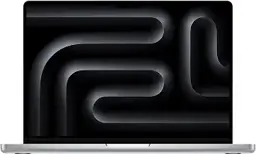
Recommended hardware for AI workflows
Apple MacBook Pro 16-inch (M4 Max)
Desktop-class performance for the most demanding creative and AI workloads.
As an Amazon Associate, ProfessionPrompts earns from qualifying purchases.
Advanced Prompt Library
4 Expert PromptsInterpreting Spectral Data from Space-Based Observations
I have a dataset of spectral readings from the GOES-16 satellite, covering a 24-hour period over the eastern Pacific. The data includes radiance values at 16 different spectral bands, as well as corresponding latitude and longitude coordinates. Using Google Earth Engine, write a script to: 1) import the dataset and convert it to a usable format, 2) apply a spectral unmixing algorithm to identify the presence of different atmospheric constituents, and 3) visualize the results as a time-series animation, with a separate layer for each constituent. Be sure to include a legend and scale bar in the visualization.
Analyzing Climate Model Output with Google Cloud AI Platform
I've run a climate model simulation using the CESM2 framework, generating a large dataset of output files in netCDF format. Using Google Cloud AI Platform, write a pipeline to: 1) ingest the output files into a Cloud Storage bucket, 2) apply a set of predefined data processing scripts to extract relevant metrics (e.g. global mean temperature, sea level pressure), and 3) train a machine learning model to predict future climate trends based on historical patterns in the data. Be sure to include hyperparameter tuning and model evaluation steps in the pipeline.
Generating Reports on Severe Weather Events from Radar Data
I have access to a database of radar reflectivity data from the NEXRAD network, covering a recent severe weather event in the central United States. Using Google BigQuery, write a query to: 1) extract the relevant data for the event, including reflectivity values, storm motion, and demographic information for affected areas, 2) apply a set of predefined thresholds to identify areas of significant damage or loss, and 3) generate a report summarizing the event, including maps, tables, and statistics on the impacted regions. Be sure to include a section on recommendations for future event preparedness and response.
Validating Satellite Precipitation Estimates against Ground Truth Data
I've obtained a dataset of satellite-based precipitation estimates from the GPM mission, covering a 6-month period over the continental United States. I also have access to a corresponding dataset of ground truth precipitation measurements from the NOAA gauge network. Using Google Earth Engine, write a script to: 1) import and align the satellite and ground truth datasets, 2) apply a set of statistical metrics (e.g. mean absolute error, correlation coefficient) to evaluate the accuracy of the satellite estimates, and 3) visualize the results as a series of maps and scatter plots, highlighting areas of agreement and disagreement between the two datasets. Be sure to include a discussion of the implications for hydrological modeling and prediction.
Alternative AI Workflows
Discover how different language models approach tasks for this specific profession.

ChatGPT Prompts for Atmospheric and Space Scientists
Explore ChatGPT-optimized templates

Claude Prompts for Atmospheric and Space Scientists
Explore Claude-optimized templates

Perplexity Prompts for Atmospheric and Space Scientists
Explore Perplexity-optimized templates

Jasper Prompts for Atmospheric and Space Scientists
Explore Jasper-optimized templates

Grok Prompts for Atmospheric and Space Scientists
Explore Grok-optimized templates
Frequently Asked Questions
What are the best Gemini prompts for Atmospheric and Space Scientists?+
Balancing the urgency of analyzing satellite data to predict severe weather events with the need to refine climate models, Atmospheric and Space Scientists face a daily tension between immediate public safety and long-term research goals. As they navigate this tightrope, they must leverage cutting-edge tools and workflows to maximize the impact of their work. This page provides 4 expert, copy-paste Gemini prompts crafted specifically for Atmospheric and Space Scientists, each with a clear use case and customization notes.
What tasks do these Gemini prompts help Atmospheric and Space Scientists with?+
They cover tasks such as Interpreting Spectral Data from Space-Based Observations, Analyzing Climate Model Output with Google Cloud AI Platform, Generating Reports on Severe Weather Events from Radar Data, Validating Satellite Precipitation Estimates against Ground Truth Data.
What should Atmospheric and Space Scientists keep in mind when using Gemini?+
It is incredibly dangerous to trust the AI for original research; instead, focus on using it to automate tedious data cleaning and interpretation tasks, freeing you up to focus on higher-level analysis and decision-making.
How many Gemini prompts are included, and are they free?+
There are 4 ready-to-use Gemini prompts on this page. They are free to copy and use, and you can adapt each one to your specific situation.
Atmospheric and Space Scientists
DashboardWorkflows
5