
Professional Context
I still remember the frustration of trying to develop a comprehensive curriculum for our nursing program, only to realize that our accreditation standards had changed yet again, rendering our entire course map obsolete. It was a daunting task to re-align our curriculum with the new standards, not to mention the time-consuming process of updating our course materials and assessments.
💡 Expert Advice & Considerations
Don't waste your time using ChatGPT to generate generic lesson plans - instead, use it to help you create customized, evidence-based practice exams that cater to your students' specific needs and learning styles.
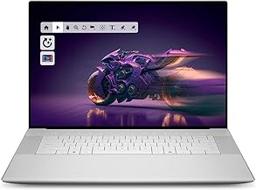
Recommended hardware for AI workflows
Dell XPS 16
16-inch OLED with discrete RTX graphics for GPU-accelerated work.
As an Amazon Associate, ProfessionPrompts earns from qualifying purchases.
Advanced Prompt Library
4 Expert PromptsCurriculum Mapping and Accreditation Compliance
Given the latest accreditation standards for nursing education, which emphasize the integration of informatics and healthcare technology, create a detailed curriculum map that aligns our existing course sequence with the new standards, including specific learning objectives, instructional strategies, and assessment methods for each course. Assume our program has 4 semesters, with 5 courses per semester, and that we need to incorporate at least 2 simulation-based learning experiences and 1 interprofessional education activity per semester. Provide a table or spreadsheet that outlines the revised curriculum, including course titles, credit hours, and accreditation standard correlations.
Clinical Scenario Development for Simulation-Based Learning
Design a set of 5 clinical scenarios for a simulation-based learning experience focused on pediatric nursing, incorporating realistic patient profiles, vital signs, and medication administration requirements. Each scenario should include a unique set of learning objectives, such as assessing respiratory distress or managing cardiac arrhythmias, and should be tailored to accommodate different levels of student proficiency, from novice to expert. Provide a detailed script for each scenario, including patient presentation, nurse-patient interactions, and expected student responses, as well as a debriefing guide with questions and topics for discussion.
Item Analysis and Test Construction for Nursing Education
Using a set of 20 multiple-choice questions from our previous nursing licensure exam, perform an item analysis to identify questions with poor discriminative power or ambiguous wording, and provide recommendations for revision or replacement. Assume the questions cover 4 content areas: pharmacology, medical-surgical nursing, pediatric nursing, and community health nursing. Calculate the point biserial correlation coefficient and KR-20 reliability coefficient for each question, and provide a table or spreadsheet summarizing the results, including item difficulty, item discrimination, and reliability estimates. Use this analysis to construct a new 10-question test form with improved validity and reliability, ensuring that the questions are balanced across the 4 content areas.
Program Evaluation and Outcomes Assessment
Develop a comprehensive program evaluation plan for our nursing education program, incorporating multiple stakeholders and data sources, such as student satisfaction surveys, employer feedback, and graduate outcomes data. Assume we have 5 program goals, including increasing student retention, improving graduate employability, and enhancing community engagement. Create a logic model that illustrates the relationships between program inputs, processes, and outcomes, and identify at least 3 metrics for each program goal, such as graduation rates, NCLEX pass rates, and alumni survey responses. Provide a detailed plan for collecting and analyzing data, including sampling strategies, data collection instruments, and statistical methods, as well as a template for reporting results and making recommendations for program improvement.
Alternative AI Workflows
Discover how different language models approach tasks for this specific profession.

Claude Prompts for Nursing Instructors and Teachers, Postsecondary
Explore Claude-optimized templates

Gemini Prompts for Nursing Instructors and Teachers, Postsecondary
Explore Gemini-optimized templates

Perplexity Prompts for Nursing Instructors and Teachers, Postsecondary
Explore Perplexity-optimized templates

Jasper Prompts for Nursing Instructors and Teachers, Postsecondary
Explore Jasper-optimized templates

Grok Prompts for Nursing Instructors and Teachers, Postsecondary
Explore Grok-optimized templates
Frequently Asked Questions
What are the best ChatGPT prompts for Nursing Instructors and Teachers, Postsecondary?+
I still remember the frustration of trying to develop a comprehensive curriculum for our nursing program, only to realize that our accreditation standards had changed yet again, rendering our entire course map obsolete. It was a daunting task to re-align our curriculum with the new standards, not to mention the time-consuming process of updating our course materials and assessments. This page provides 4 expert, copy-paste ChatGPT prompts crafted specifically for Nursing Instructors and Teachers, Postsecondary, each with a clear use case and customization notes.
What tasks do these ChatGPT prompts help Nursing Instructors and Teachers, Postsecondary with?+
They cover tasks such as Curriculum Mapping and Accreditation Compliance, Clinical Scenario Development for Simulation-Based Learning, Item Analysis and Test Construction for Nursing Education, Program Evaluation and Outcomes Assessment.
What should Nursing Instructors and Teachers, Postsecondary keep in mind when using ChatGPT?+
Don't waste your time using ChatGPT to generate generic lesson plans - instead, use it to help you create customized, evidence-based practice exams that cater to your students' specific needs and learning styles.
How many ChatGPT prompts are included, and are they free?+
There are 4 ready-to-use ChatGPT prompts on this page. They are free to copy and use, and you can adapt each one to your specific situation.
Nursing Instructors and Teachers, Postsecondary
DashboardWorkflows
5